Motorcycle Vs. Deer Accidents: How Risk And Injury Severity Compare
Quick Summary
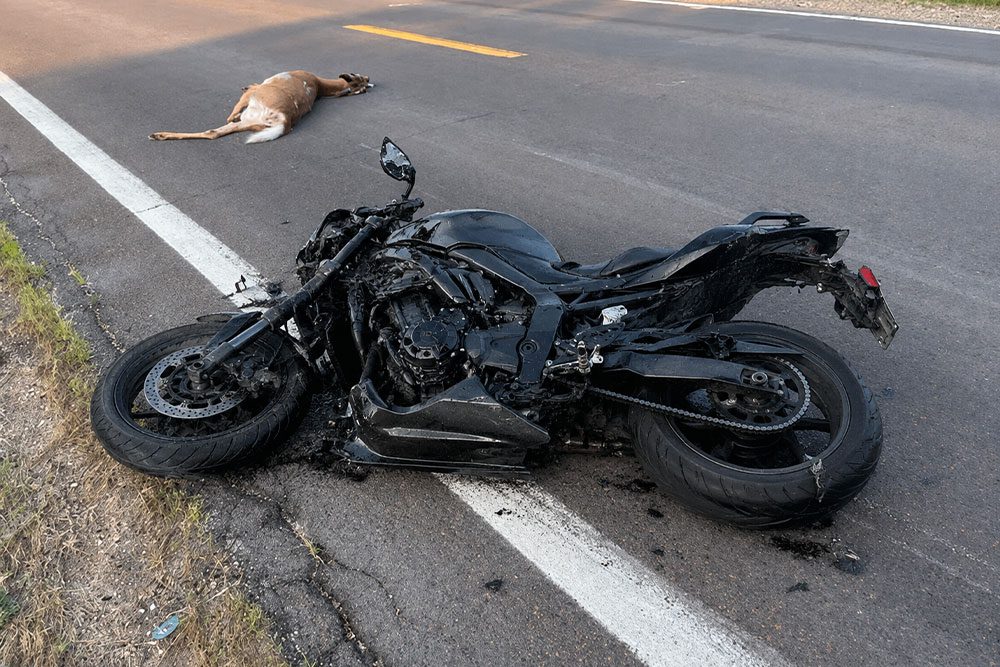
Motorcycle vs. deer accidents can be severe because riders have little protection during impact. Risk often rises on rural roads, wooded routes, curves, and poorly lit areas. Injuries may come from hitting a deer, falling from the bike, sliding, or striking another object. Legal questions may involve insurance coverage, other drivers, road conditions, and available evidence.
A sudden deer crossing can turn a normal ride into a serious motorcycle accident within seconds. Motorcycle vs. deer accidents are especially dangerous because riders have far less physical protection than drivers inside cars or trucks. Even a small deer can cause a rider to lose balance, leave the roadway, or collide with another vehicle. For motorcyclists, the danger is not only the impact with the animal. It is also the fall, the slide, and anything the rider may strike afterward.
Why Deer Collisions Are So Dangerous for Motorcyclists
Motorcycles react differently from cars when a deer appears in the road. A driver may have a larger frame, airbags, seat belts, and more stability during impact. A rider depends on balance, traction, visibility, and quick reaction time. Once that balance is disrupted, the crash can become severe very quickly.
Deer are also unpredictable. They may freeze, dart forward, turn back, or travel in groups. A rider who swerves too sharply may avoid the deer but still crash. A rider who brakes hard may lose traction, especially on wet roads, gravel, curves, or poorly lit rural routes.
Because motorcycles are lighter and more exposed, the rider usually absorbs more of the force. That makes these crashes different from many standard vehicle collisions. Even at moderate speeds, a deer strike can lead to broken bones, road rash, head trauma, spinal injuries, shoulder injuries, or internal harm.
How Risk Changes Based on Road Conditions
Risk often rises in areas where wooded land, open fields, and roadways meet. Deer are more likely to cross near tree lines, rural highways, suburban edges, and roads with limited lighting. Early morning and evening rides can also be more dangerous because visibility drops while deer activity may increase.
Speed plays a major role as well. A rider traveling faster has less time to react and a longer stopping distance. This matters because deer often appear without warning. By the time the rider sees movement near the road, there may only be a second or two to respond.
Road design can add another layer of danger. Curves, narrow shoulders, missing warning signs, poor lighting, and overgrown vegetation can make it harder to spot wildlife in time. For motorcycle riders, those conditions leave very little room for error.
Why Injury Severity Can Be Higher Than Expected
Motorcycle crashes involving deer can look simple at first, but the injuries are often more serious than people expect. A rider may never hit another vehicle, yet still suffer major harm from being thrown from the bike. The force of landing on pavement can damage the head, back, neck, ribs, hips, knees, and shoulders.
Severity also depends on what happens after the first impact. A rider may slide into another lane, hit a guardrail, strike a tree, or get hit by a passing vehicle. This chain reaction can make the case more complex because the crash may involve road conditions, visibility, nearby drivers, or unsafe property maintenance near the roadway.
Medical treatment may continue for months after the crash. Some riders need surgery, physical therapy, pain management, or follow-up care with specialists. Lost income can also become a major issue when injuries keep someone away from work. That is why the full value of the claim should account for more than the first hospital bill.
Legal Issues After a Motorcycle and Deer Crash
A deer may cause the initial danger, but that does not always mean there is no legal claim. Another driver may have made the situation worse by following too closely, speeding, drifting into the rider’s lane, or failing to react safely. Poor roadway design or lack of maintenance may also matter in some cases.
Insurance questions can become confusing after this type of crash. The rider may need to review motorcycle coverage, health insurance, uninsured motorist coverage, property damage, and other available options. Insurance companies may also argue about the cause of the crash or the severity of the injuries.
A careful review can help show what happened before, during, and after the impact. Photos, police reports, medical records, witness statements, repair estimates, and nearby video footage may all support the case. The goal is to connect the injuries, losses, and available coverage clearly.
How We Help Injured Motorcycle Riders Move Forward
At Freeman Injury Law, we help injured riders understand their options after a serious crash. We look at the facts, review available insurance coverage, gather records, and communicate with the insurance companies so our clients do not have to handle those conversations alone.
We are easy to reach by phone, email, and text. Our clients can communicate directly with their lawyer and paralegal, and every case is handled by a lawyer. We focus on strong case preparation, clear updates, and the client’s net recovery.
Motorcycle and deer crashes can leave riders with painful injuries, damaged bikes, and many unanswered questions. At Freeman Injury Law, we take the time to understand the full impact of the crash and pursue the recovery available under the facts of the case. Contact us today for a free consultation.
FAQs
Why are deer crashes more dangerous for motorcycles?
Motorcycles offer less protection, so riders face a higher risk of impact injuries, falls, and secondary collisions.
Can road conditions affect a motorcycle and deer crash?
Yes, poor lighting, sharp curves, narrow shoulders, wet pavement, and overgrown roadside areas can increase crash risk.
What evidence matters after a motorcycle and deer accident?
Photos, police reports, medical records, witness statements, repair estimates, and nearby video footage can help explain what happened.